
Wrapping Family Recovery Court Graduates in Community
Family Recovery Court works to reunite families. It does so by providing parents the necessary services to navigate both their personal treatment journey and the legal system’s dependency process. One of the best ways to succeed—in court, as in life—is by creating a strong, healthy community of support and accountability.
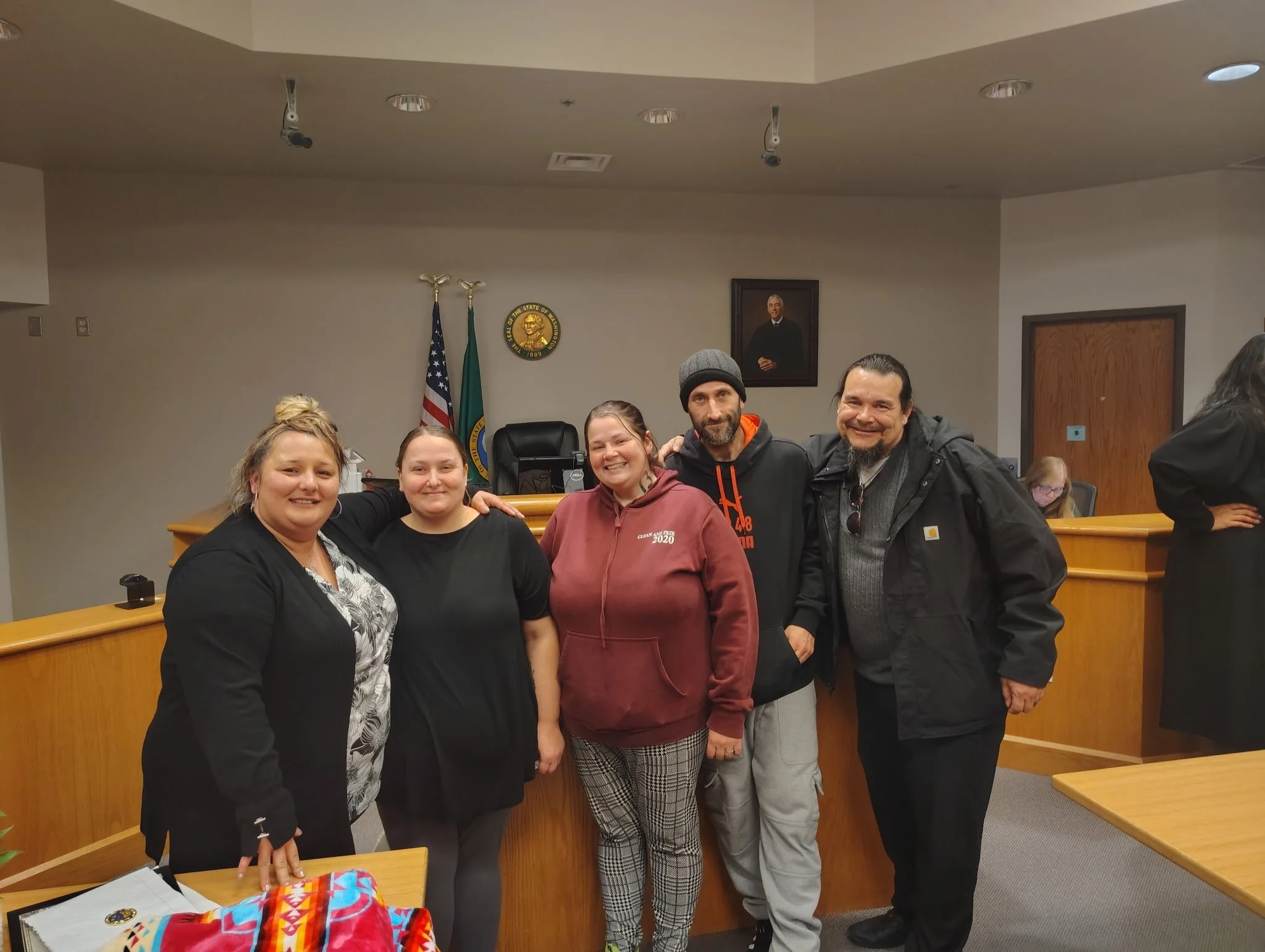
Locally, Michael Rihtarich takes the idea of community one step further. Leaning into his Native American heritage, he recently celebrated a session’s completion with a special touch for one tribal graduate of the FRC program.
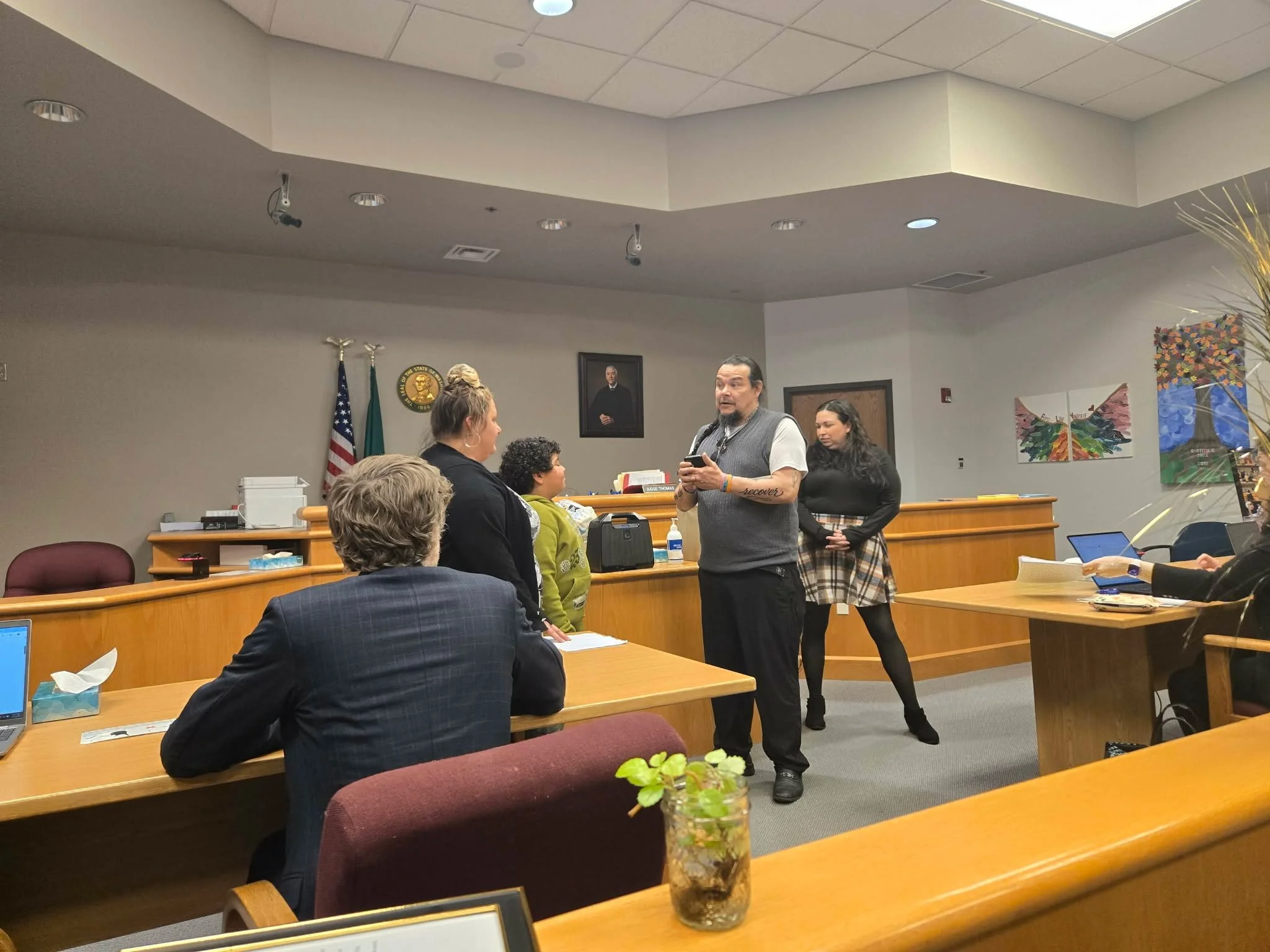
Rihtarich is a social service worker and part of the Parent Representation Program with the Washington State Office of Public Defense. In March 2026, he was asked to play the drums for an FRC graduation and chose a song honoring the graduate’s specific ancestry. “I’ve played at local powwows and other tribal gatherings,” says Rihtarich, “and I’d absolutely do this again; it was a real honor to be asked.”
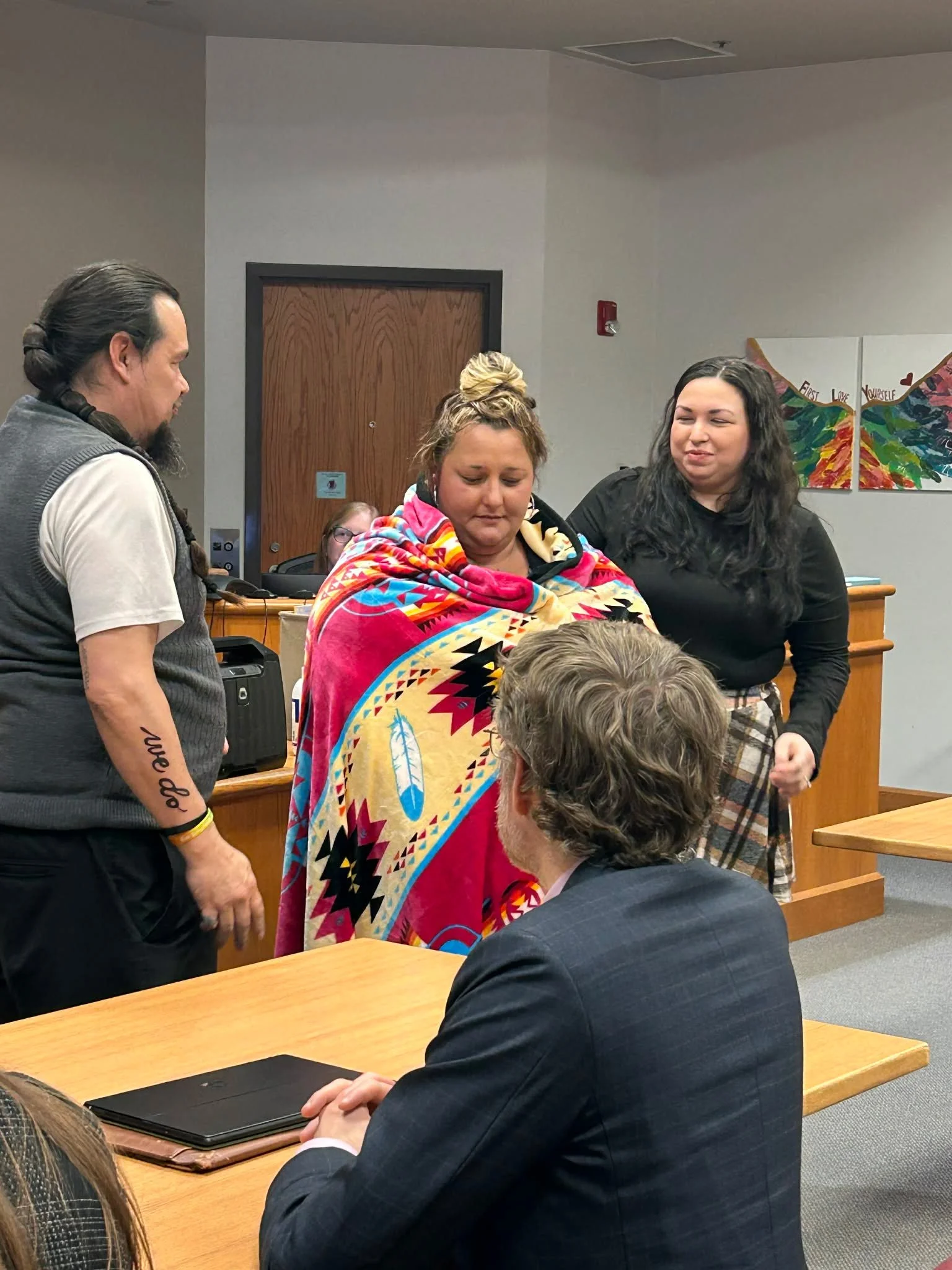
In addition to the music, Rihtarich wrapped the graduate in a woven blanket, a cultural custom which symbolizes wrapping the community around someone for support, history, family, and comfort.
He knows how important those can be, as he’s gone through the system himself. Rihtarich explains that he was raised in the system, frequently incarcerated and addicted to drugs and alcohol. In 2022, he was pulled over for a DUI with his young daughter in the car. The addition of child endangerment and her subsequent removal from the home changed his life.
Not her biological father, Rihtarich fought for his daughter and became the legal de facto parent. Even though he gave up crime and held down a day job, giving up drugs and alcohol proved especially difficult. But sitting in the courtroom with the potential of losing his daughter “I felt so hopeless despite being in and out of the system myself,” he recalls. “But I worked hard and got her back in three months. I didn’t want other parents to sit in the courtroom alone so eventually started helping. Today I’m 2 ½ years in and thriving. I tell my boss I’m blessed to get a paycheck but I’d be doing this anyway. It helps me stay sober and helps hold out hope for other parents.”
In FRC, participants must maintain a rigorous schedule of court-ordered services, meetings, hearings, drug testing, and therapy. The Strophy Foundation’s Tonia McClanahan was one of the people who saw Rihtarich’s potential and welcomed him into the organization. He has since spoken at program alumni events and sponsored reunification days. He also regularly attends FRC court, helping parents hold out hope that change is possible.
“The Strophy Foundation really supports aftercare,” says Rihtarich, “which is especially important for recovering addicts and alcoholics. They also spread the word to keep communities coming together and seeing what the real need is.”
Chief Seattle once said that “Humankind has not woven the web of life. We are but one thread within it. Whatever we do to the web, we do to ourselves. All things are bound together. All things connect.” Whether the sound of the drums, the interwoven strands of a blanket, or the family support system we build around us, connection is always the key.